The Remarried Empress
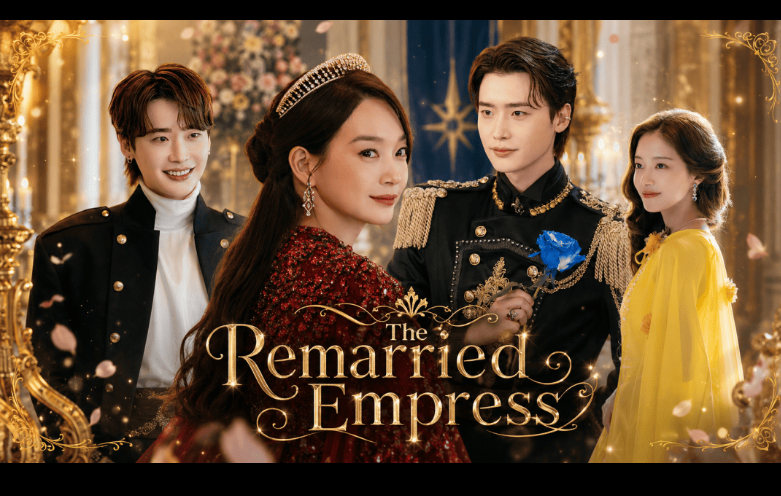
There are K-dramas you look forward to. Then there are K-dramas that feel like cultural events — the kind that have fans refreshing their feeds at 2 AM for the faintest trailer rumor. The Remarried Empress is unambiguously the latter.
Based on one of the most beloved fantasy romance webtoons ever published on Naver — a series that has surpassed 2.7 billion cumulative global views — this upcoming Disney+ Korean drama arrives carrying the weight of millions of devoted readers’ expectations. The source material spent years building a passionate international fandom precisely because it dared to do something different: it gave the wronged empress not a breakdown, but a crown.
With a cast that reads like a fantasy booking sheet (Shin Min-ah, Lee Jong-suk, Ju Ji-hoon, and Lee Se-young all in one show), a director with a track record of prestige television, and a production that filmed on location in Europe to preserve the story’s Western-fantasy aesthetic, The Remarried Empress Kdrama is shaping up to be one of the most anticipated Korean drama releases of 2026.
Quick Answer: The Remarried Empress at a Glance
| Detail | Information |
|---|---|
| Title | The Remarried Empress (재혼 황후) |
| Genre | Fantasy Romance, Palace Drama, Political Romance |
| Country | South Korea |
| Language | Korean |
| Adaptation Source | Web novel and Naver Webtoon by Alphatart |
| Main Cast | Shin Min-ah, Ju Ji-hoon, Lee Jong-suk, Lee Se-young |
| Director | Jo Soo-won (Pinocchio, Today’s Webtoon) |
| Writer | Yeo Ji-na & Hyun Choong-yeol (The Uncanny Counter) |
| Production | Studio N |
| Episodes | 10 |
| Streaming Platform | Disney+ (exclusive) |
| Expected Release | Second half of 2026 |
| Filming Period | June 9 – November 13, 2025 |
| Filming Locations | Prague, Czech Republic (and other European locations) |
What Is The Remarried Empress About?
At its heart, The Remarried Empress is a story about a woman who refuses to be humiliated.
Empress Navier Ellie Trovi is the pinnacle of the Eastern Empire — intelligent, graceful, politically astute, and beloved by her subjects. She has known Emperor Sovieshu since childhood. Their marriage was not a love story in the traditional sense; it was a partnership built on mutual respect and shared ambition to build a great nation. That was enough. It was, in many ways, more stable than love.
Then Sovieshu brings home Rashta.
Rashta is a runaway slave whose beauty captivates the emperor completely. He installs her as his mistress, showers her with affection he never gave Navier, and eventually moves toward divorcing his empress — the woman who has been his most loyal companion — so that Rashta can take her place.
Here is where the story takes the turn that made it legendary among webtoon readers worldwide.
Navier does not beg. She does not weep publicly. She does not scheme to get her husband back. Instead, on the very day of her divorce proceedings, she arrives with a single condition: she will agree to the divorce — but only if she is permitted to remarry immediately, to Prince Heinrey of the Western Empire, a man who has quietly been offering her something Sovieshu never managed: genuine attention.
The Eastern Empire is stunned. Sovieshu is furious. And Navier walks out of one empire straight into another, not as a discarded wife but as an empress in her own right.
The Political Romance Setup
What distinguishes this fantasy romance drama from typical palace fare is how deeply the story is embedded in court politics. Navier’s remarriage is not merely an emotional decision — it is a geopolitical maneuver. The Western Empire and Eastern Empire exist in a delicate balance of power, and Navier’s marriage to Heinrey shifts that balance significantly.
The drama then unfolds on multiple fronts: Navier and Heinrey navigating a marriage that began as convenience but evolves into something genuine; Sovieshu grappling with the consequences of his choices and an increasing awareness that he made a catastrophic mistake; and Rashta discovering that holding a throne is far more complex and dangerous than stealing one.
A Story Told in Layers
The genius of the original webtoon — and what the live-action adaptation will need to carry faithfully — is that nobody in this story is simply good or simply evil. Rashta is not a cartoonish villain. She is a woman who survived brutal circumstances using the only tools available to her, and whose ambitions, while destructive to others, are ultimately comprehensible. Sovieshu is not a monster — he is a man who made selfish choices and then discovered, far too late, what he had destroyed.
That moral complexity is what elevated this story beyond standard revenge fantasy into something that resonates emotionally with audiences across cultures.
The Remarried Empress Cast and Characters
The casting announcement in April 2025 triggered immediate, widespread excitement across global Kdrama communities. The script reading on May 13, 2025 confirmed the four leads were fully committed, and production photos that followed sent fan forums into overdrive.
Shin Min-ah as Empress Navier
Shin Min-ah inhabits Navier with a credibility that few other Korean actresses could bring. Her career trajectory — from My Girlfriend Is a Gumiho (2010) to Hometown Cha-Cha-Cha (2021) and the critically appreciated Our Blues (2022) — demonstrates an actor who has never been confined to a single register. She can do warmth; she can do elegance; and she has shown a quiet steel in roles that demand emotional restraint under pressure.
Navier requires all of that simultaneously. She is not cold — she is controlled. She is not cruel — she is precise. Shin Min-ah’s ability to convey a character’s interior life through posture and stillness, rather than dramatic outbursts, makes her a near-ideal match for an empress whose greatest power lies in what she does not show.
This is also Shin Min-ah’s return to historical fantasy after several contemporary dramas, and the reunion with Ju Ji-hoon (their third collaboration, after Lucifer in 2007 and The Naked Kitchen in 2009) adds another layer of real-world chemistry that fans have been anticipating for over fifteen years.
Ju Ji-hoon as Emperor Sovieshu
Ju Ji-hoon built his reputation playing royalty. His breakout role in Princess Hours (2006) set the template, and his performance as the zombie-fighting crown prince in Kingdom (2019–2020) cemented him as one of Korean television’s most commanding presences in period settings.
Sovieshu is arguably the most complex role in the drama. He is the antagonist in the most immediate sense — he is the one who initiates the betrayal — but he is not written as a villain. He is a man of genuine power who confuses infatuation for love, lets it override his better judgment, and spends the rest of the story living with what that cost him. Ju Ji-hoon’s combination of physical authority and quiet emotional vulnerability makes him exactly right for a character who needs to be sympathetic even when he is wrong.
Lee Jong-suk as Prince Heinrey
Lee Jong-suk’s casting as Heinrey is the kind of announcement that stops the internet. His last television role was Big Mouth in 2022; his return to the small screen — in a fantasy romance, no less — had been anticipated for years. Previous credits include While You Were Sleeping (2017), W: Two Worlds (2016), and Pinocchio (2014), all of which showcase his ability to play characters with hidden depths and significant narrative weight.
Heinrey is the role tailor-made for Lee Jong-suk’s strengths. On the surface, he is charming, playful, and politically savvy. Beneath that, he carries secrets — motivations that are not fully transparent and a capacity for strategic thinking that matches Navier’s. Watching these two intellectually matched characters circle each other while developing genuine feelings is precisely the kind of slow-burn dynamic that Lee Jong-suk has always excelled at portraying.
Lee Se-young as Rashta
Lee Se-young’s casting as Rashta was the most surprising and — in retrospect — most inspired choice of the ensemble. Known primarily for her work in The Law Cafe (2022) and What Comes After Love, she has typically played sympathetic leads. Taking on the role of the story’s most morally complicated character signals an intentional pivot, and early fan reactions have been enthusiastic about watching her inhabit a character this far outside her established range.
Rashta is not simply a villain. She is a woman who clawed her way out of slavery using beauty and cunning, only to find herself trapped in a court that simultaneously uses and despises her. Lee Se-young’s natural warmth, deployed against type, could make Rashta genuinely heartbreaking rather than merely antagonistic.
Why Fans Are Excited About The Remarried Empress
The hype around this drama did not materialise overnight. It is the product of years of cumulative investment by an enormous global readership.
The Webtoon’s Unparalleled Reach
The numbers are difficult to contextualise without acknowledging how rare they are. The Remarried Empress webtoon has accumulated over 2.7 billion cumulative global views on Naver, making it one of the most-read fantasy romance properties in Korean digital publishing history. It has been translated into 10 languages and carries a particularly fervent following in Japan, where the fantasy-romance genre has deep roots in manga culture.
This is not a niche property getting a prestige adaptation. This is one of the most widely read Korean fantasy stories of the past decade finally making the leap to live-action.
The Cast Chemistry
The particular combination of these four actors has generated discussion that goes beyond standard casting coverage. Shin Min-ah and Ju Ji-hoon have prior on-screen history, which adds real-world texture to their fictional adversarial dynamic. Lee Jong-suk’s return from a lengthy post-military hiatus is a newsworthy event in itself. And Lee Se-young taking on a villain-adjacent role represents a significant departure that her fanbase is watching closely.
The Production’s Commitment to the Source Material
When early filming photos in November 2025 triggered backlash over costume design that fans felt deviated from the webtoon’s European-inspired aesthetic, Studio N issued an official apology and course-corrected. That responsiveness matters enormously to an adaptation fandom accustomed to being ignored. It signals that the production team understands exactly how protective this community is of the source material.
The decision to film primarily in Prague and other European locations — rather than adapting the setting to a Korean or East Asian palace aesthetic — was also a deliberate signal. This is the first Korean drama adaptation of a novel and webtoon that has been produced as-is, preserving the original Western fantasy setting rather than localising it.
The Fantasy Romance Trend Is at Its Peak
The Korean entertainment industry has been steadily building its fantasy romance genre infrastructure, and audiences — both domestic and international — have responded. Alchemy of Souls demonstrated that K-drama audiences will fully commit to world-building when the emotional stakes are high. My Demon showed the appetite for supernatural romance with prestige production values. The Remarried Empress arrives at the intersection of those trends with source material that has been proven at scale.
The Remarried Empress Webtoon Explained
The Original Creation
The story began as a web novel by Alphatart, serialised on Naver’s web novel platform from November 2018 to March 2020. The webtoon adaptation — illustrated by SUMPUL and adapted by HereLee — began on Naver Webtoon in October 2019 and ran for a remarkable seven years before concluding its main story run in early 2026, with side stories announced for later that year.
The English version is available on the WEBTOON platform (Line Webtoon). Print publication in English is handled by Yen Press/Ize Press.
Why Readers Loved It
Several elements elevated this story above the crowded field of palace romance webtoons.
First, the protagonist’s agency. Navier does not spend the story waiting for rescue. Every major decision in the narrative — the remarriage, the political alliances, the management of court dynamics in the Western Empire — is made by her, on her terms. For readers who had spent years watching female leads in similar stories be defined entirely by the men around them, this was revelatory.
Second, the moral complexity of every character. The story resists the easy pleasure of pure villain-versus-hero dynamics. Rashta is given a full backstory that contextualises her choices. Sovieshu’s love for Rashta, however destructive its consequences, is portrayed as genuine. Even secondary court characters are given motivations beyond simple loyalty or treachery.
Third, the world-building. The Eastern and Western Empires feel like real political entities with their own power structures, histories, and diplomatic relationships. The romance between Navier and Heinrey is always also a story about geopolitics.
What to Expect from the Adaptation
The live-action will need to compress a sprawling narrative into ten episodes. The creative team — director Jo Soo-won (Pinocchio, Today’s Webtoon, My Happy Ending) and writers Yeo Ji-na and Hyun Choong-yeol (The Uncanny Counter) — brings a combination of fantasy and emotionally grounded drama experience that positions them well to handle the adaptation challenges.
The preservation of the European setting is the most significant structural decision. It keeps the story in its original context rather than forcing it into a Joseon-era Korean aesthetic that would feel incongruous with the characters and their dynamics.
Main Themes in The Remarried Empress
Betrayal and Its Aftermath
The inciting event of the story — Sovieshu’s betrayal of a childhood companion and partner — resonates because it is not spectacular. There is no dramatic villain. There is a man who allowed infatuation to override twenty years of genuine partnership. The damage that kind of quiet betrayal causes, and how it reshapes a person’s relationship with trust, is a thread that runs through the entire narrative.
Female Empowerment Through Dignity
Navier’s choice — remarriage as an act of self-determination rather than victimhood — was genuinely subversive within its genre when the webtoon debuted. She does not define her response to betrayal in terms of the betrayer. She defines it in terms of her own future. That distinction between revenge-motivated plotting and forward-looking agency gives the story an emotional coherence that pure revenge narratives sometimes lack.
Royal Politics and Power
The drama is as much a political thriller as it is a romance. The balance of power between the Eastern and Western Empires, the internal court factions of both kingdoms, and the way personal relationships are always entangled with geopolitical consequences give the story a density that rewards close attention.
Love That Earns Itself
The romance between Navier and Heinrey is deliberately slow. It does not begin with attraction — it begins with political alliance and mutual respect. The feelings develop because these two people genuinely see each other clearly, not in spite of their circumstances but through them. That earned-trust dynamic is what makes their eventual relationship one of the most satisfying in Korean fantasy romance.
The Cost of Social Class
Rashta’s storyline is essentially a parallel examination of what ambition costs when you begin at the bottom of a rigidly hierarchical society. The contrast between her trajectory and Navier’s — one woman working to hold what was given to her by birth, another fighting to take what she was never supposed to have — gives the drama a social dimension that elevates it beyond simple love triangle territory.
Expected Release Date and Streaming Platform
What We Know Officially
Disney+ confirmed The Remarried Empress as part of its 2026 Korean original slate at the Disney+ Original Preview 2025 event in Hong Kong in November 2025. The series is confirmed for a second half of 2026 release window on Disney+.
Filming ran from June 9 to November 13, 2025. Given the post-production timeline for a 10-episode prestige fantasy production with European filming locations and presumably significant visual effects work, a late 2026 premiere — potentially Q3 or Q4 — is the most likely scenario. Some industry trackers have suggested a May or June window, though this has not been officially confirmed.
Netflix vs. Disney+
Some early coverage erroneously connected this drama to Netflix. To be clear: The Remarried Empress is a Disney+ exclusive. Netflix is not involved. Disney+ Korea has been building a high-profile Korean original slate since 2021, and this drama represents one of its most significant investments in the fantasy romance genre.
No Korean Broadcasting Channel
Unlike many K-dramas that simulcast on domestic networks alongside global streaming, The Remarried Empress is structured as a streaming-first original, consistent with Disney+’s Korean content strategy for prestige productions.
Will The Remarried Empress Become a Hit K-drama?
Comparison with Similar Dramas
| Drama | Similarities | Platform | Performance |
|---|---|---|---|
| Alchemy of Souls | Fantasy world-building, political romance | Netflix | Massive global hit |
| My Demon | Fantasy romance, prestige cast | Netflix | Strong domestic and international numbers |
| Kingdom | Period fantasy, prestige production, Ju Ji-hoon | Netflix | Globally acclaimed |
| The Empress (Germany) | Royal palace drama, feminist angle | Netflix | International crossover hit |
| Mr. Queen | Palace comedy-romance | tvN | Huge domestic ratings |
The Remarried Empress shares DNA with all of these — the world-building ambition of Alchemy of Souls, the feminist palace politics of Mr. Queen, the visual scale of Kingdom — while offering something none of them do: a story whose source material already has a verified global audience of billions.
The Global Fanbase Factor
Unlike dramas that build their audience from the premiere episode, The Remarried Empress arrives with a pre-existing, highly engaged global fandom. Readers who spent years with the webtoon will not need convincing — they will arrive on day one. The question is whether the adaptation can convert that readership into drama viewers who then expand the audience through word of mouth.
Given the casting, the production values evident from early set stills, and the team’s demonstrated responsiveness to fan feedback, the conditions for that conversion are unusually favorable.
The International Appeal Argument
Fantasy romance as a genre travels exceptionally well globally — it is not dependent on cultural specificity in the way that, say, workplace dramas or family melodramas can be. The European setting removes even the modest barrier of unfamiliarity with Korean court aesthetics. And the emotional core of the story — a woman rebuilding her sense of self after betrayal — is genuinely universal.
If The Remarried Empress executes well, it has the structural profile of a drama that could perform not just among established Kdrama fans globally but also among general Disney+ subscribers who have never watched a Korean drama before.
Best K-dramas Similar to The Remarried Empress
If you’re already counting down the days until this drama premieres, here are the best K-dramas to watch in the meantime — all of which share its DNA in meaningful ways.
Alchemy of Souls (2022, Netflix) — The gold standard of recent Korean fantasy romance. Intricate world-building, strong female lead, and a romance that develops through genuine emotional complexity rather than convenience. Essential viewing for anyone interested in The Remarried Empress.
Mr. Queen (2020, tvN) — A palace comedy-romance with a surprisingly sharp feminist perspective on what it means to be a woman inside a royal court. The tonal contrast with The Remarried Empress is significant, but the palace-politics intelligence is comparable.
Kingdom (2019–2020, Netflix) — Ju Ji-hoon in peak form, in a prestige period production that proved Korean historical fantasy could compete at the highest global level. Watch it to understand what he brings to Emperor Sovieshu.
Moon Lovers: Scarlet Heart Ryeo (2016) — The foundational modern Korean fantasy romance K-drama. Flawed in execution but enormously influential in establishing the template that The Remarried Empress both follows and transcends.
The Crowned Clown (2019) — A politically complex palace drama with strong writing and genuine emotional stakes. A good reference point for how Korean historical drama handles moral ambiguity in court settings.
Empress Ki (2013–2014) — One of the earliest Korean palace dramas to foreground a female protagonist’s political agency. Sweeping in scope, uneven in pacing, but essential viewing for fans of strong-empress narratives.
Frequently Asked Questions
Is The Remarried Empress based on a webtoon? Yes. The drama is adapted from the Naver Webtoon of the same name, which is itself an adaptation of a web novel written by Alphatart. The web novel was serialised from November 2018 to March 2020; the webtoon adaptation began in October 2019 and concluded its main run in early 2026.
Who plays the main role in The Remarried Empress? Shin Min-ah plays Empress Navier, the female lead. The main cast also includes Ju Ji-hoon as Emperor Sovieshu, Lee Jong-suk as Prince Heinrey, and Lee Se-young as Rashta.
Where can I watch The Remarried Empress? The drama will stream exclusively on Disney+. It is not coming to Netflix, and there is no confirmed domestic Korean broadcasting channel.
Is The Remarried Empress coming to Netflix? No. Despite some early confusion in media coverage, The Remarried Empress is a Disney+ original series, not a Netflix production. It will stream exclusively on Disney+.
What genre is The Remarried Empress? It is a fantasy romance drama with strong political and palace intrigue elements. Think of it as occupying the intersection of fantasy world-building, romantic drama, and court politics.
How many episodes does The Remarried Empress have? The series consists of 10 episodes, produced by Studio N.
When is The Remarried Empress releasing? The official confirmed window is the second half of 2026 on Disney+. No specific premiere date has been announced as of May 2026.
Who directed The Remarried Empress? The drama is directed by Jo Soo-won, known for Pinocchio, Today’s Webtoon, and My Happy Ending. The screenplay was written by Yeo Ji-na and Hyun Choong-yeol, the team behind The Uncanny Counter.
Where was The Remarried Empress filmed? Filming took place primarily in Prague, Czech Republic, along with other European locations. This makes it the first Korean drama adaptation of a novel and webtoon to preserve the original Western fantasy setting rather than adapting it to a Korean aesthetic.
How popular is The Remarried Empress webtoon? The webtoon has accumulated over 2.7 billion cumulative global views according to Naver’s official content metrics, and has been translated into 10 languages. It has a particularly strong following in Japan.
Conclusion: Why The Remarried Empress Matters
There is a version of The Remarried Empress that could have been a straightforward revenge fantasy — a wronged woman plotting her way back to the top. That version would have been entertaining. It is not the version that Alphatart wrote.
What makes this story matter, and what makes the adaptation so genuinely high-stakes, is that it offers something rarer: a portrait of dignity as resistance. Navier does not define herself against the people who hurt her. She defines herself through what she builds after them. In a media landscape full of stories about women surviving betrayal, that distinction is still, somehow, unusual enough to feel radical.
The stars have aligned for this adaptation in a way that almost never happens. The source material has a verified global audience. The cast is composed of actors who each bring individual prestige and mutual chemistry. The production has demonstrated creative responsiveness. And Disney+ has the global infrastructure to deliver the drama to every single reader who spent years invested in the webtoon.
Whether The Remarried Empress becomes a hit K-drama is almost beside the point — it is already, before a single episode has aired, one of the most culturally significant Korean drama productions in recent memory. The real question is whether it becomes something bigger than that: the fantasy romance that introduces an entirely new generation of global viewers to what Korean storytelling can do when it’s at its best.
Given everything in front of it, the answer might very well be yes.